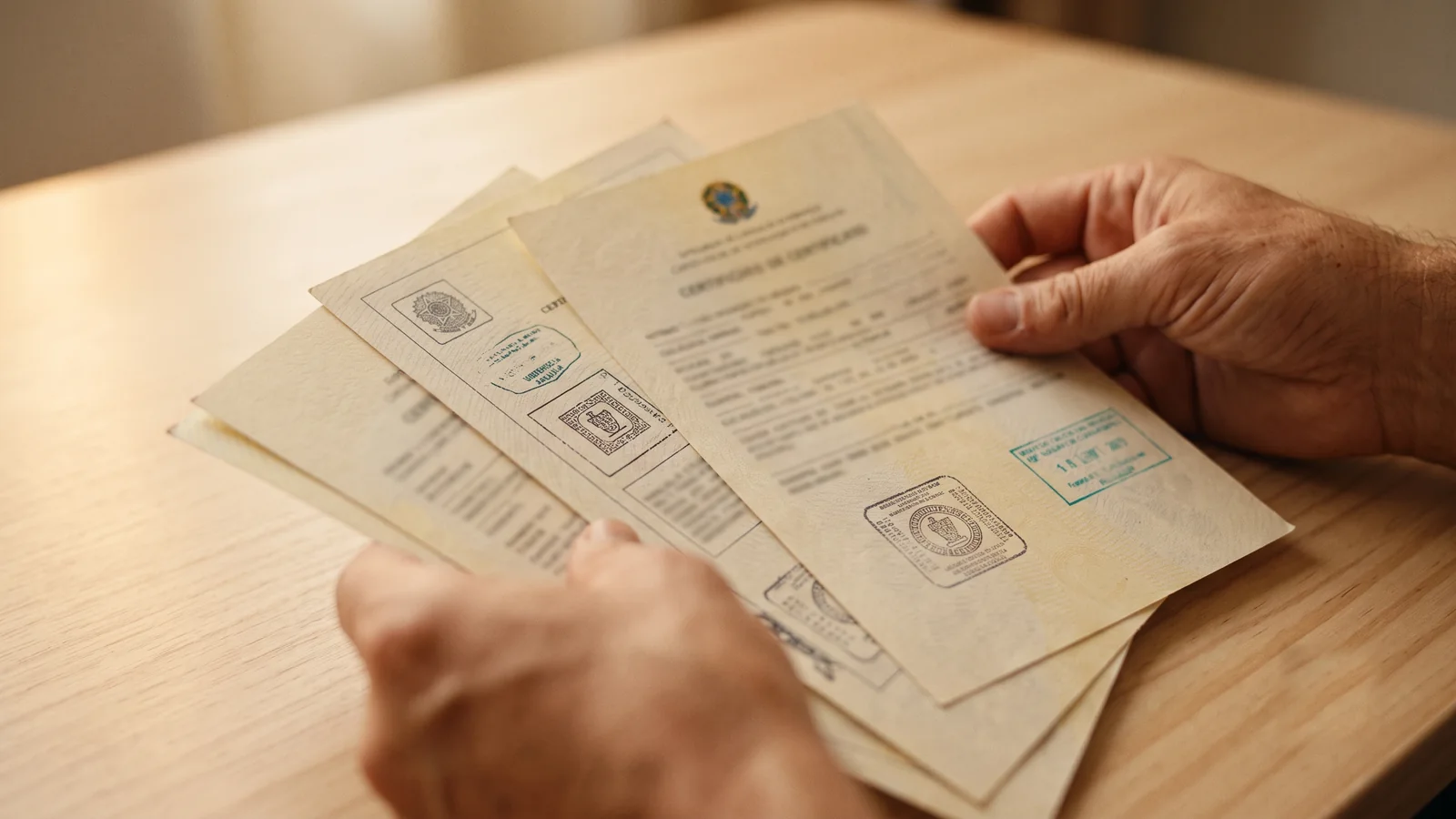
An apostille is the seal that authenticates a Brazilian public document for use in the United States, without going through a consulate. Birth, marriage and police certificates usually need one — and the order issue, apostille, translate is what prevents doing the work twice.
One detail catches many people off guard mid-process: the path to a green card or a visa can depend on documents issued in Brazil — and, depending on how they will be used, they may need to be recent and apostilled. Finding that out early saves weeks of scrambling and of documents flying between countries.
The Brazilian certificates that come up most
- Birth certificate — nearly universal in family-based cases.
- Marriage certificate — for the marriage-based green card.
- Police clearance certificate — federal and/or state, depending on the case.
- Depending on the situation: divorce or death certificates (to establish prior marital status), among others.
Many of these, when required, must be recent — some have a short validity window for immigration purposes. Issuing them far too early can mean issuing them again.
What the Hague Apostille is
Brazil and the United States are both party to the Hague Convention, which created the apostille — a seal certifying the origin of a public document for use abroad, replacing the old consular legalization process. In practice the apostille is affixed by the competent authority in the issuing country (in Brazil, the cartório), and tells the US side: “this document is official and genuine.”
When your case requires a Brazilian certificate to be recognized in the US, it commonly needs to arrive apostilled. And if it is in Portuguese, it will also need a translation with the proper certification — see the translation guide.
The order that avoids doing it twice
Sequence matters. The pattern that usually works:
- Issue the certificate (in the version and with the date your case requires).
- Apostille the document with the competent authority in the issuing country.
- Translate it into English, with the translator's certification.
Doing it out of order — translating before the apostille, for instance — sometimes forces a redo. So confirm the specific requirement for your case type at uscis.gov (or with the consulate, for consular processing) before issuing and apostilling everything.
The step that delays cases most
Someone living in the US who needs a fresh certificate from Brazil faces the logistics of issuing, apostilling and shipping from a distance. Starting that part early, with time to spare, is what separates a calm process from a race against an RFE deadline.
Prime Immigration Office helps organize and prepare this document package — understanding what your case requires, in the right order, with translation and apostille that line up. We do not decide your case — USCIS does — but we make sure the Brazilian-side documents arrive complete and on time.
Educational information, not legal advice. Prime Immigration Office is a paralegal service — document preparation only. For legal advice, consult a licensed Texas attorney or DOJ-accredited representative.