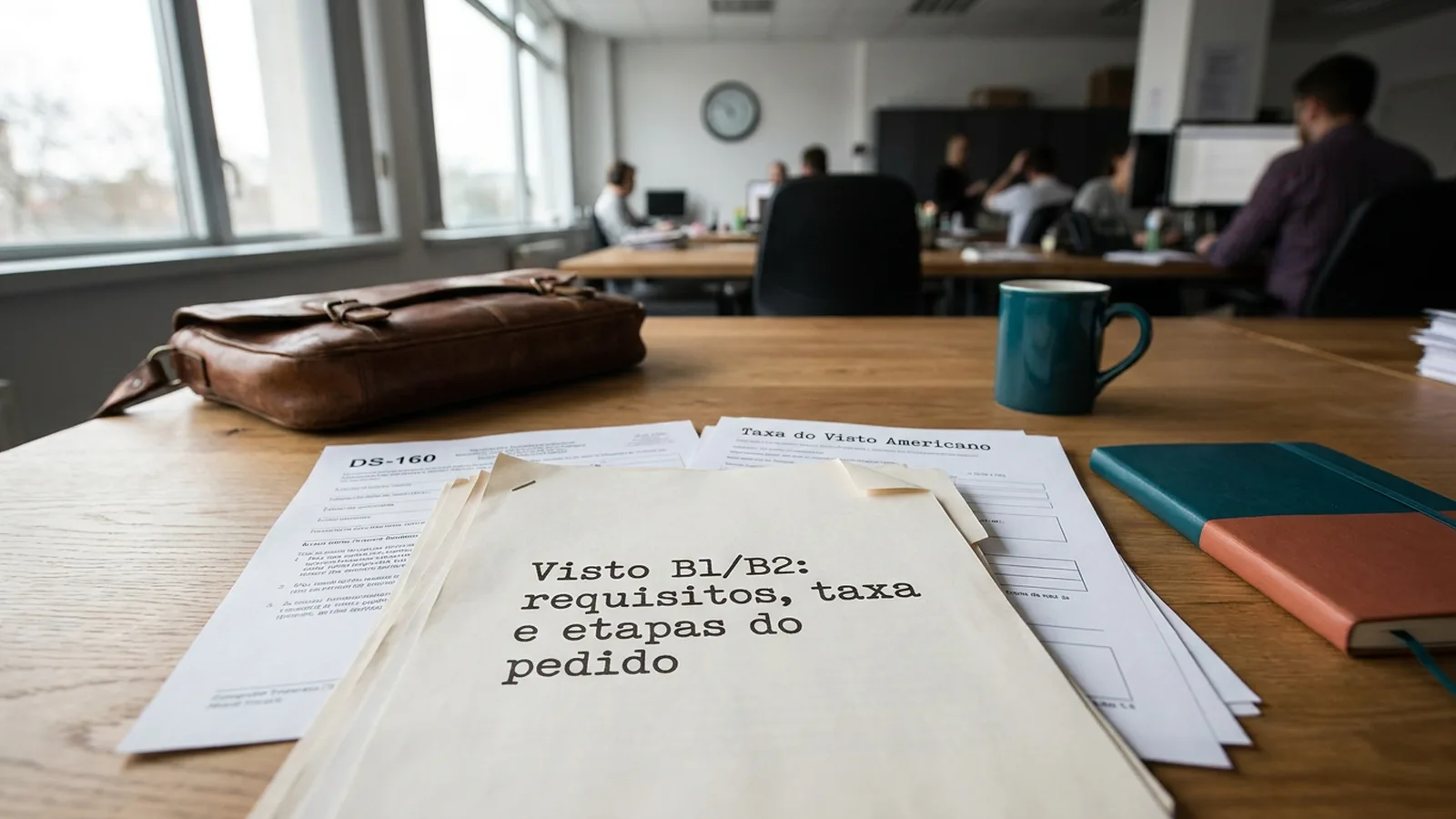
The B1/B2 visa is the United States visitor visa: the B-1 covers business, the B-2 covers tourism, and the B-1/B-2 combines both. According to the Department of State, the process has four steps: the DS-160 form, fee payment, scheduling, and the consular interview. This guide describes what the government requires at each step, with amounts and dates from official sources.
What is the B1/B2 visa for?
The Department of State defines the visitor visa as the visa for temporary entry for "business (B-1 visa), for tourism (B-2 visa), or for a combination of both purposes (B-1/B-2 visa)." In other words: business, tourism, or both.
Among business activities (B-1), the official page cites meetings with business partners, conventions, contract negotiations, and settling an estate. Among tourism activities (B-2), it cites vacation, visiting family, medical treatment, and amateur sports without pay.
The same page lists what the visitor visa does not cover: work, paid performances, study, and permanent residence. Anyone planning to study can find the specific path in our guide on the F-1 student visa 4-year rule.
What are the application steps?
The official visitor visa page organizes the application into four steps, in this order:
- Complete the DS-160 form, the "Online Nonimmigrant Visa Application," submitting a photo that follows the Department of State's photo requirements.
- Pay the application fee, which is non-refundable.
- Schedule the interview at the U.S. embassy or consulate.
- Attend the interview, where the consular officer evaluates the application and collects fingerprints.
Each step has its own rule, described in the sections below.
How much does the B1/B2 visa fee cost?
The Department of State fee schedule lists US$185 for the visitor visa (category B: business, tourism, and medical treatment), within the "non-petition-based nonimmigrant visa" group. The visitor page also describes this US$185 amount as the non-refundable application fee.
There is also an issuance fee, which depends on the country of citizenship. The fee schedule refers to the "Visa Reciprocity Tables" to find the amount and states that it varies by country, according to the same fees page.
What documents does the Department of State require?
The basic list from the official page includes:
- A valid passport, with validity of at least six months beyond the period of stay in the U.S.
- The DS-160 confirmation page.
- The fee payment receipt.
- A photo, if the online upload did not work.
The Department of State also states that the consular officer may consider evidence of the purpose of the trip, the intent to leave the U.S. at the end of the stay, and the ability to cover the costs of the trip, according to the same page. The page does not provide a closed list of documents for this evidence.
Where is the interview held?
According to the Department of State, the general guidance is to schedule the interview at the embassy or consulate of the country where you live. Wait times for appointments vary by location, time of year, and visa category, and the official page advises checking the wait time at the post where the application will be made.
Some people renewing a visa in certain categories may be eligible for an Interview Waiver, which allows renewal without appearing in person, according to the visitor visa page. Eligibility rules are found on the consular post's pages.
What changed with the visa bond program?
On August 3, 2026, the Department of State published the Visas: Visa Bond Program rule in the Federal Register, effective the same date. The rule turns into a permanent program the 12-month pilot that began on August 20, 2025.
According to the text, applicants for the B-1/B-2 visa may be required to post a bond (visa bond) to guarantee that they maintain status and depart the U.S. on time. Consular officers may require a bond of up to US$20,000 as a condition for issuing the visa, at each officer's discretion, according to the published rule.
Does the visa guarantee entry into the U.S.?
No. The Department of State explains that the visa allows travel to a port of entry and request for authorization to enter, and that it "does not guarantee entry," according to the official page. The final admission decision belongs to a CBP officer at the port of entry.
If entry is authorized, the CBP officer provides an admission stamp or Form I-94, the Arrival/Departure Record, according to the same page. Anyone traveling with another pending process can find more details in the guide on traveling with a pending immigration case.
What if plans change during the stay?
The Department of State states that if plans change while in the U.S., for example due to marriage to a U.S. citizen or a job offer, it is possible to request a change of nonimmigrant status, according to the visitor page. To extend the stay, the page refers to the USCIS "Extend Your Stay" section.
USCIS describes Form I-539 as the application for certain nonimmigrants to "extend their stay or change to another nonimmigrant status." Before submitting, check the current edition of the form on the USCIS page, since older editions are not accepted.
What is the step-by-step summary?
- Complete the DS-160 online and save the confirmation page.
- Pay the US$185 fee and check your country's issuance fee in the Visa Reciprocity Tables.
- Schedule the interview at the post in the country where you live and check the wait time.
- Gather your passport, DS-160 confirmation, receipt, and photo.
- Check whether the visa bond program applies to your application, according to the rule dated August 3, 2026.
- After entry, keep the admission stamp or the I-94 provided by CBP.
For other immigration topics, see the Prime Immigration Office blog.
Sources
- Department of State: U.S. Visitor Visa
- Department of State: Fees for Visa Services
- Federal Register: Visas: Visa Bond Program (2026-15726)
- USCIS: Form I-539
Educational information, not legal advice. Prime Immigration Office is a paralegal service — document preparation only. For legal advice, consult a licensed Texas attorney or DOJ-accredited representative.