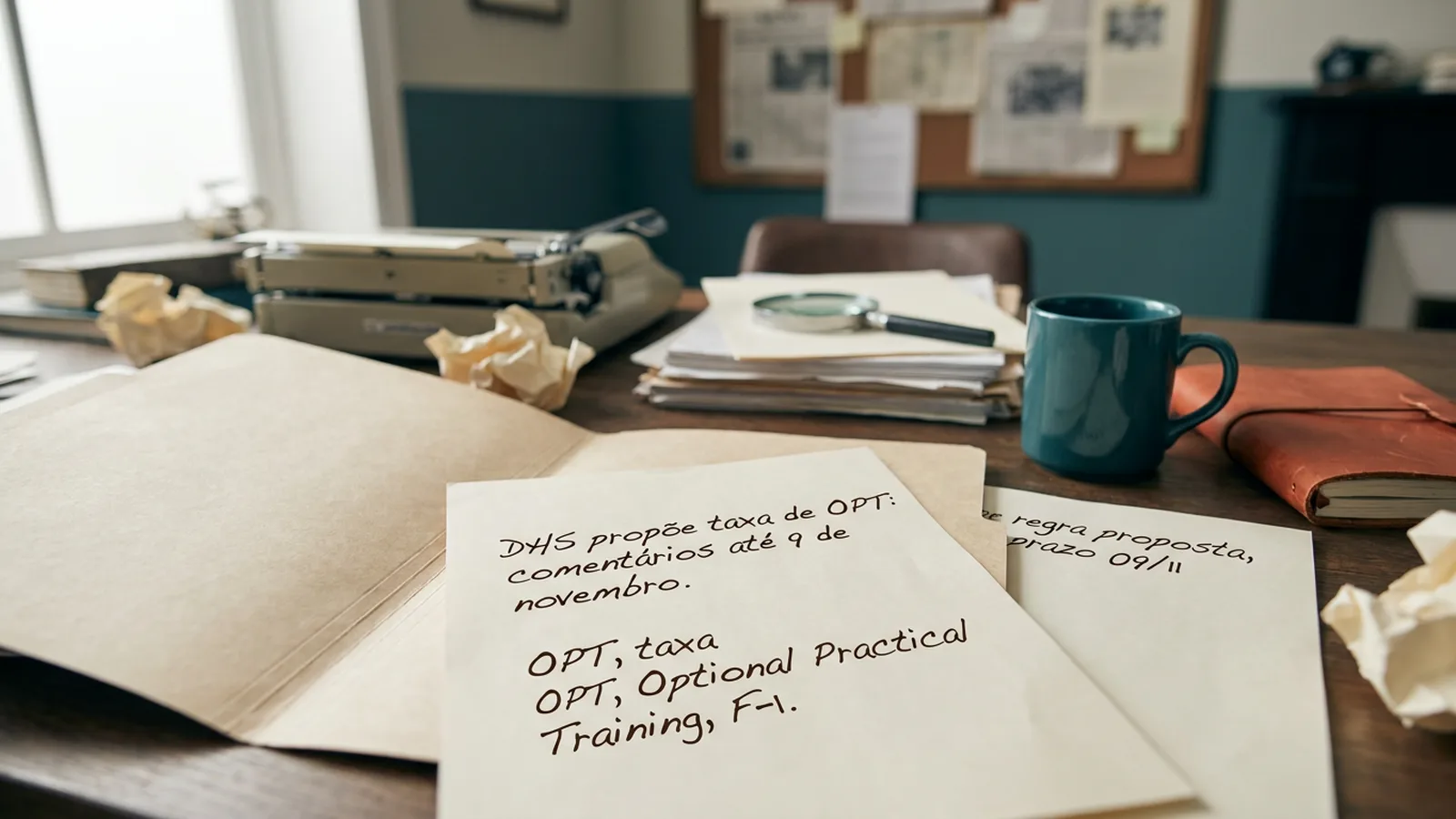
The Department of Homeland Security (DHS) published on October 8, 2026, a proposed rule in the Federal Register that would charge $70,000 for initial OPT and $30,000 for any subsequent OPT from each F-1 student. This is a proposal: the text is not yet in effect, and the comment period runs until November 9, 2026.
What happened?
DHS published the notice of proposed rulemaking (NPRM) "Optional Practical Training Fees," Docket ICEB-2026-0100, 91 FR 64566. OPT (Optional Practical Training) is the work authorization tied to F-1 status. The proposal creates fees for OPT conducted through an institution certified by SEVP (Student and Exchange Visitor Program).
DHS explains the measure as a way to combat irregularities, strengthen the integrity of the system, and protect American workers. The text cites investigations into suspicious employers and numbers of students on OPT: 194,554 on pre- or post-completion OPT in 2024 and 165,524 on STEM OPT.
What changes in practice?
If the rule is adopted as is, DHS proposes two fee tiers:
- $70,000 for initial OPT;
- $30,000 for any subsequent OPT.
DHS justifies the higher value for initial OPT by stating that the student may not have been reassessed since applying for the visa and being admitted. Currently the regulations describe OPT without a fee of this kind. This means the amounts above are a proposal, and the fee is not currently being charged.
Who pays and when?
According to the text, the fee would be paid by the school, not directly to the government by the student. DHS writes that schools would have to pay the fee before the DSO records the OPT recommendation in SEVIS. The DSO is the school official who works within the SEVIS system.
DHS states that it intends to verify payment for each recommended student. The proposal provides that schools may pass the cost on to students or employers and includes a refund rule for cases where the student does not receive the Employment Authorization Document (EAD). The amounts would be deposited into the U.S. Treasury as miscellaneous receipts.
Who is affected?
The proposal refers to every F-1 student who does OPT through a SEVP-certified school. This involves students, schools, DSOs, and employers. The excerpt we reviewed does not describe any exemptions. It also does not make clear, in the summary, how the 24-month STEM extension fits into the two fee tiers, so that point depends on the full text of the rule, available at the Federal Register.
The text also mentions the final rule on duration of status (91 FR 44976, July 17, 2026), which affects whether or not a student needs an extension of stay for OPT. If you want to understand the student's path before OPT, see our guide on I-20, the SEVIS fee, and F-1 visa application steps.
What is the next date?
The general comment deadline is November 9, 2026. Comments on the information collection (Paperwork Reduction Act) are due by December 7, 2026.
To comment, DHS directs readers to the federal portal regulations.gov, under docket ICEB-2026-0100. According to the notice, emails or letters sent directly to DHS, hand deliveries, and digital media are not treated as comments. Comments are made public, including personal information.
How does the proposal fit into the OPT process?
To follow the case step by step:
- Read the text of the proposed rule and the summary in the Federal Register.
- Note the final comment date (November 9, 2026).
- Watch the Federal Register for whether DHS publishes a final rule and its effective date.
- Keep an eye on guidance from your school's international student office, which is the one that handles SEVIS.
For those in other visa categories, our guides on the B1/B2 visa: requirements, fee, and steps and EB-1 extraordinary ability show how the steps of each form work. See more on the Prime blog.
Sources
- Federal Register: Optional Practical Training Fees (2026-20660, 91 FR 64566)
- Regulations.gov: comment on docket ICEB-2026-0100
- Official PDF of the 10/8/2026 issue (govinfo)
Educational information, not legal advice. Prime Immigration Office is a paralegal service — document preparation only. For legal advice, consult a licensed Texas attorney or DOJ-accredited representative.